Step Into the Right Choice
Are you torn between the luxury of a long soak and the sleek practicality of a walk-in shower—like deciding between an evening at Wolf Trap’s outdoor stage or a sunrise jog through Great Falls Park? Wondering which one truly adds comfort and value to your bathroom remodel?
In this post, you’ll explore the pros, cons, and design insights that help you decide whether a bathtub, shower, or hybrid setup best fits your home and routine.
By the end, you’ll know which one to choose for your bathroom remodel (or if you want both).
Which Is Better — Bathtub or Shower?
Showers are better for daily convenience, space efficiency, and easier cleaning. Bathtubs are better for relaxation, muscle recovery, and improving sleep. Homes with only one bathroom should keep at least one tub for resale value. Choose based on lifestyle, family needs, and future market appeal.
What other luxury upgrades does your bathroom need?
Bathtub vs. Shower
| Feature | Walk-In Shower | Bathtub | Hybrid (Shower + Tub) |
|---|---|---|---|
| Average Cost | $6,500–$14,000 | $4,000–$9,000 | $11,000–$23,000 |
| Space Requirements | Ideal for small bathrooms | Needs 7–10 sq ft | Best for larger bathrooms |
| Water Usage | Lower — showers save space and use less hot water | Higher — uses more hot water per fill | Moderate — depends on layout and habits |
| Accessibility | Excellent — curbless shower entry suits disabilities or mobility issues | Moderate — requires stepping over the tub edge | Good — varies based on design |
| Maintenance | Low — fewer grout lines, easier to clean | Moderate — more surface area and caulking | High — needs dual waterproofing and cleaning |
| Safety | High — non-slip tiles and grab bars reduce the risk of slipping | Lower — higher chance of slipping and getting injured | High — if designed with safety features |
| Relaxation & Health Benefits | Quick rinse convenience, efficient for busy routines | Deep soaking provides amazing health benefits; it helps relieve muscle pain and improve sleep quality | Offers both a quick rinse and long soak options |
| Family Use | Best for adults or older homeowners | Perfect for bathing children or pets | Great for families needing flexibility |
| Design Options | Frameless glass, spa stone, modern tile | Freestanding tub, clawfoot, whirlpool | Wet rooms or separate shower/tub zones |
| Resale Value Impact | High for modern buyers seeking efficiency | Strong for traditional buyers; at least one bathtub is often required for resale | Highest — appeals to both potential buyer groups |
| Energy Efficiency | Excellent — comes to conserving energy and water | Lower — requires more hot water to fill | Moderate — balanced usage |
| Best Fit For | Compact layouts, modern homes, accessibility remodels | Families, relaxation-focused remodels, and resale flexibility | Luxury or spacious layouts, master bathroom upgrades |
Walk-In Showers
Pros of Walk-In Showers
- Improve accessibility with curbless entries that reduce slipping risks.
- Maximize space in small bathrooms with open layouts.
- Simplify cleaning by eliminating grout lines and curtains.
- Lower water use and energy costs with shorter showers.
- Boost resale value with a modern, stylish design.
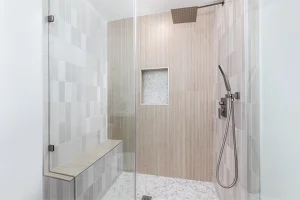
- Add comfort through customizable features like rainheads, steam, or bench seating.
Cons of Walk-In Showers
- Cause water splashes if drainage or waterproofing is poor.
- Limit use for bathing kids or pets due to a lack of tub space.
- Raise upfront costs, typically between $6,500 and $14,000.
- Require added waterproofing to prevent long-term damage.
Popular Walk-In Shower Styles
Frameless glass with subway tile creates a timeless, bright look that keeps bathrooms feeling open.
Spa-inspired natural stone designs with rainfall heads evoke a high-end, relaxing atmosphere, reminiscent of the tranquil aesthetics found at Salamander Resort’s spa suites.
Homeowners looking for modern flair might choose geometric tile patterns or matte black fixtures.
Adding non-slip tiles and grab bars provides safety without sacrificing visual appeal, especially in bathrooms where aging-in-place is a consideration.
Bathtubs
Pros of Adding a Bathtub
- Reduce stress, ease muscle pain, and improve sleep through therapeutic bathing.
- Support child and pet bathing with a convenient, enclosed space.
- Increase resale value with built-in or freestanding tubs that add timeless appeal.
- Boost wellness by easing tension, colds, and circulation through hot water soaking.
- Maintain home value by offering at least one tub for buyer preference.
Cons of Adding a Bathtub
- Require 7–10 square feet, limiting suitability for small bathrooms.
- Consume more hot water, raising energy costs and reducing efficiency.
- Pose entry challenges for seniors or those with limited mobility.
- It costs between $4,000 and $9,000 to install, based on materials and plumbing.
Common Tub Styles and Pairings
A freestanding tub becomes a statement piece that elevates the entire bathroom design.
Clawfoot tubs add charm to older or traditional homes, echoing the craftsmanship in Leesburg’s historic homes near Market Station, while Japanese soaking tubs bring spa serenity to compact modern spaces.
Built-in whirlpools offer hydrotherapy benefits that rival high-end spas.
You can even combine a marble tub with shower glass or pair a slipper tub with green accents to bring a natural, calming touch.
Shower vs. Bathtub Resale Value
Homes with modern walk-in showers sell for about $1,500 more on average, according to 2024 data.
However, removing the only bathtub can reduce buyer interest, especially in family-friendly markets. Real estate experts recommend keeping at least one tub to preserve resale flexibility.
Upgrading an outdated tub to a spa-style shower with glass enclosures and premium finishes can increase perceived value and make the home feel more current.
Balancing both options—retaining one bathtub while enhancing showers—offers the best resale outcome.
Hybrid Solutions — The Best of Both Worlds
Pros of Hybrid Layouts
- Combine shower and tub for all-in-one convenience and flexibility.
- Attract more buyers and improve resale value with dual bathing options.
- Offer versatility for both quick showers and relaxing soaks.
- Fit well in large bathrooms with room for separate zones or wet rooms.
Cons of Hybrid Layouts
- Demand more space and careful design planning.
- Need extra waterproofing to manage splash and steam.
- It costs more than installing a standalone shower or tub.
Practical Combination Options
For many homeowners, choosing between just a bathtub or a shower isn’t necessary.
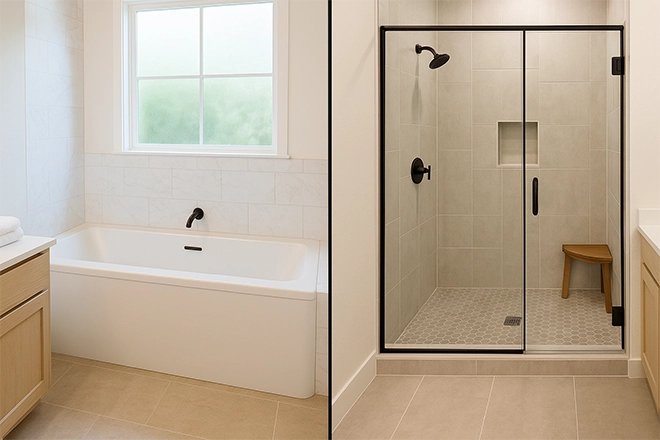
Shower-tub combos are perfect for secondary bathrooms or rentals, providing quick rinse practicality without sacrificing soaking potential.
Wet room layouts combine an open shower and a freestanding tub behind glass partitions, maximizing flow and style in larger spaces.
Dedicated zones, where the tub and shower each have their own area, work well in luxury bathrooms and improve your home’s resale value.
Key Design and Installation Tips
To make hybrid layouts work, waterproofing and smart design are essential.
Install recessed floors or prefabricated shower trays to ensure proper drainage, and use linear drains to prevent water pooling.
Uncoupling membranes under tile floors helps stop cracking caused by movement or moisture changes.
Incorporate non-slip tiles in wet areas to reduce the risk of slipping and getting injured, especially where kids or elderly family members might require assistance.
A hybrid bathroom remodel can range from $11,000 to $23,000, but it can dramatically increase your resale value when it comes time to sell your home.
We offer design services as well.
Factors to Consider Before Choosing Between a Bathtub and a Shower
Household Demographics
Your household’s makeup plays a major role in the bathtub vs. shower decision.
Families with young children often prioritize having a tub for convenience and safety, while couples or adults with mobility concerns may prefer the accessibility of walk-in showers.
Including at least one bathtub in your home helps preserve flexibility for future buyers, especially if they have kids or pets. If you’re renovating a main bathroom space, think about who uses it most often and what their needs will be in the years ahead.
What else do accessible bathrooms require?
Space and Layout
In bathrooms where every square foot counts, showers save space and create more open movement.
For bathrooms under 5 by 8 feet, a curbless shower layout maximizes usability and makes the room feel bigger.
Larger spaces, especially those over 80 square feet, can accommodate hybrid layouts that provide both a quick rinse and a relaxing bath.
Architectural Style and Resale
The style of your home can guide which fixture fits best.
A clawfoot or freestanding tub complements traditional architecture, while a minimalist walk-in shower fits modern or mid-century design.
From a market perspective, the shower vs. bathtub resale discussion continues to evolve, but keeping at least one tub often maintains stronger resale value. Studies show homes without tubs spend around 11 more days on the market, underscoring how resale value remains tied to flexibility for potential buyers.
Don’t forget local building codes.
Soak or Shower? Foley Construction & Contracting Helps You Find the Perfect Fit
Whether you want the relaxing calm of a deep soak or the sleek practicality of a quick rinse, Foley Construction & Contracting can bring your bathroom vision to life. Their team designs and builds beautiful, functional spaces tailored to your lifestyle, layout, and long-term goals.
Ready to upgrade your bathroom with the perfect blend of comfort and convenience? Fill out our contact form today or give us a call to start your remodel with Foley Construction.