Catch Some ZZZs on the Breeze
Wish you could sleep outside without the bugs or blazing sun ruining the vibe? Wondering what exactly a sleeping porch is and why so many older homes used to have one?
This post will walk you through what a sleeping porch is, how to design one, and why it might be the coolest home addition you didn’t know you needed.
By the end, you’ll know how to create a home addition that’s both charming and practical.
What Is a Sleeping Porch?
A sleeping porch is designed to let people sleep outside by catching breezes and blocking mosquitoes. Popular in the early 20th century, these porches offered fresh air without discomfort. Despite air conditioning, they remain ideal for anyone wanting outdoor rest with the comfort of a real bed.
Contact us today about your home addition project.
Are Sleeping Porches Still Relevant Today?
Homeowners are bringing sleeping porches back with a twist.
Many have turned them into sunrooms, outdoor living rooms, or three-season guest rooms while keeping that open-air feel.
Even when not used for sleeping, these porches still inspire how we design outdoor spaces. The focus on airflow, natural light, and flexible indoor-outdoor living continues to show up in modern architecture.
What Are the Benefits of a Sleeping Porch?
Natural Cooling and Ventilation
One of the biggest reasons people still love sleeping porches is the airflow.
When you’re up on the second floor or in a breezy corner of the house with screened windows on three sides, you get a steady stream of fresh air all night long. That cross-ventilation helps release the warmth that builds up indoors during the day.
Sleeping in that open-air setting can actually feel cooler than staying in a sealed bedroom with the windows shut.
Health and Wellness
Sleeping in the open air doesn’t just feel good; sleeping outside can support your overall well-being.
Back in the early 1900s, sleeping porches were believed to have health benefits for conditions like tuberculosis, thanks to the fresh air and improved breathing environment.
While we have better medicine now, the idea still holds weight.
Sleeping outside can lower stress, regulate your circadian rhythm, and even help you fall asleep faster. The cool air, gentle night sounds, and reduced indoor heat all work together to help your body rest more deeply.
Added Living Space
A sleeping porch gives you more usable space without needing to add a new room.
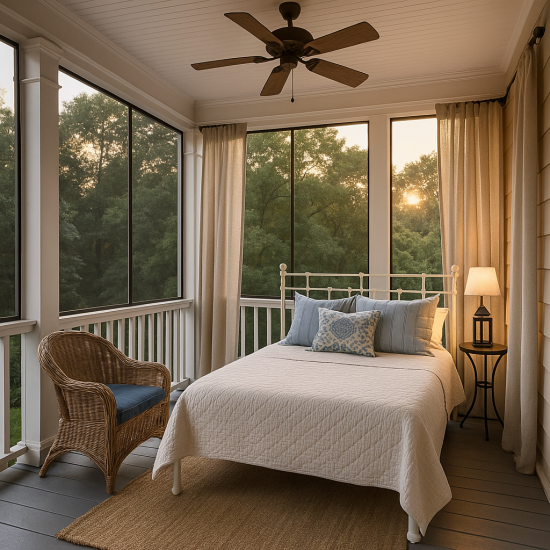
You can set it up as a second bedroom, a quiet space for reading or relaxing, or even a place for guests to stay in the summer months. Some people keep it super simple with a bed and fan, while others decorate it like a cozy outdoor living room.
Either way, it’s a flexible zone that you can use differently depending on the season.
In the cooler months, it can even double as a sunroom or nap zone with the windows closed.
How to Design a Sleeping Porch
Location and Layout
When building or converting a space into a sleeping porch, location matters more than you might think.
The best sleeping porches are placed where they’ll get the most consistent breeze, usually a second-floor back corner or the side of the house that catches the evening wind.
If you’re working with a front porch or a lower floor, think about airflow and how the surrounding walls or landscaping might block it.
You’ll also want to plan for roof coverage and screen placement, so you can stay dry and protected while keeping the windows open all night long.
Privacy Features
To make your sleeping porch feel like a true escape, privacy is key.
Even if you’re on the second floor, you might be visible from neighboring homes or the street.
You can solve this with outdoor curtains, lattice walls, tall planters, or roll-down shades. These options let you block the view without closing off the space completely.
Comfort and Furnishings
This is where your sleeping porch turns from a bare space into the perfect place to rest.
A hanging bed or daybed creates a fun and relaxing vibe, but even a simple outdoor mattress or cot will work if it’s comfy.
Look for porch furniture and fabrics that are rated for outdoor use, like marine-grade cushions and moisture-resistant throws.
Don’t forget to add small comforts like a side table for your book, a rug to warm up the floor, or a ceiling fan to help on still nights.
Lighting and Ambiance
Lighting sets the tone for nighttime rest.
Too much brightness ruins the cozy mood, but too little makes it hard to read or move around safely. Use low, warm lights like sconces, lanterns, or dimmable string lights to give your sleeping porch a soft evening glow.
You can even add battery-powered candles or solar lights if you want to avoid wiring.
Choose gentle, layered lighting that makes the space feel peaceful and calm, like a bedroom under the stars.
Historical Background of Sleeping Porches
Sleeping porches became a common feature in homes around a century ago. They offered a way to sleep outdoors without being directly exposed to insects, rain, or summer heat.
Back then, fresh air was believed to help fight illness and boost the immune system. Doctors often recommended outdoor sleeping to help with tuberculosis and other breathing issues.
Sleeping porches were everywhere until residential air conditioning changed how homes were built and cooled. Once air conditioning became standard, these outdoor sleep spaces started to fade from new home designs.
Rest Easier with Foley Construction & Contracting
Foley Construction & Contracting can transform your home with thoughtful updates that combine charm, comfort, and function. We bring the craftsmanship and design skills needed to build your perfect place to rest.
If a peaceful, open-air sleeping space sounds like something your home needs, we’d love to help bring it to life. Fill out our contact form today or give us a call.