
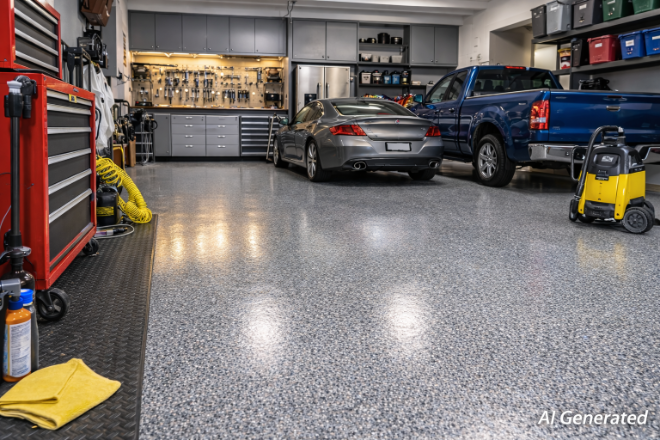
Floor It or Ignore It? Why Your Garage Floor Deserves an Upgrade
Have you ever wondered why some garages look polished and functional while others feel like dusty storage spaces?
Are you trying to figure out which garage flooring options will actually hold up to vehicles, spills, and everyday wear and tear?
In this guide, you’ll learn about the most common garage flooring options, how they perform, and which materials work best depending on how you use your garage.
By the end, you’ll understand how to choose the best garage flooring for your needs and transform your garage into a durable, attractive space that’s easier to maintain.
What Are the Best Garage Flooring Options?
Garage flooring options range from simple concrete treatments to specialized systems designed for durability and style.
Most people choose materials based on how the garage is used, the level of maintenance they want, and their overall budget.
- Concrete is the standard garage floor surface and can be improved with stains, sealers, or polished concrete treatments.
- Epoxy and polyurea coatings add a protective layer that resists chemicals, oil spills, and heavy vehicle traffic.
- Interlocking tiles create a modular floor system with easy installation and customizable color choices.
- Vinyl flooring offers a softer surface that is water-resistant and easy to clean.
- Rubber garage floor mats provide cushioning and slip resistance for work areas.
- Materials such as porcelain tile, stone, and wood offer visual appeal but can come with higher cost or maintenance requirements.
Why Garage Flooring Matters
A garage floor experiences some of the toughest conditions in a home.
Vehicles track in dirt, moisture, and road salt. Oil spills and chemicals can stain the concrete surface. Over time, these factors can damage the floor and make the space look worn.
Upgrading your garage flooring options does more than improve appearance; it also prepares your property for a detached garage.
It can also increase durability, simplify maintenance, and make the space more useful.
Many homeowners begin to notice these benefits when they start using the garage for more than parking a car, especially when exploring detached garage ideas that turn the space into a workshop, storage area, or hobby zone.
Workshops, hobby areas, storage systems, and workout spaces all benefit from high-quality garage flooring.
Even in communities around Purcellville and the surrounding Loudoun County area, where garages often double as workshop spaces or storage for outdoor gear from nearby Appalachian Trail access points, the floor takes constant abuse.
Choosing the right materials helps keep the space in tip-top shape.
Foley Construction and Contracting often works with homeowners who want their garages to serve more than just as simple storage spaces. We regularly help design and build detached garages with upgrades such as interior finishing, workshop electrical packages, and epoxy flooring, so you can create a garage that fits your needs.
Contact us, and we’ll help you create your dream garage, from flooring to all the rest.
Concrete as a Garage Flooring Base
Durability and Practicality
Concrete is the standard garage floor in most homes because it is strong, durable, and relatively affordable.
It easily supports the weight of vehicles, tools, and storage systems.
A concrete floor can handle heavy loads and frequent use, making it a go-to choice for garages that serve as both parking and work areas. For many homeowners, concrete provides a solid foundation for additional flooring upgrades.
Because the surface is already in place when the house is built, improving it usually involves coatings, stains, or polishing rather than full replacement.
Limitations of Bare Concrete
While concrete is durable, it has several drawbacks.
The surface is porous, which means liquids like oil, brake fluid, and chemicals can be easily absorbed.
Once these substances penetrate the concrete floor, they can leave permanent stains. Bare concrete can also feel hard and uncomfortable underfoot if you spend long periods working in the garage.
Temperature changes can also affect untreated concrete. Extreme temperatures can cause the material to expand and contract, leading to cracking over time.
Improving Concrete Floors
Fortunately, there are several ways to upgrade a basic concrete floor.
Stains and sealers can improve appearance while helping protect the surface from spills. Polished concrete is another option that creates a smoother, more attractive finish.
These upgrades help transform your garage from a basic storage area into a cleaner and more attractive space.
Epoxy and Polyurea Garage Floor Coatings
Epoxy Coatings
Epoxy is one of the most popular garage floor coating systems available today. When applied correctly, epoxy forms a durable finish that bonds to the concrete surface.
This type of floor coating helps protect the garage floor from oil spills, stains, and damage from vehicles or heavy tools.
Professional-grade epoxy coatings can also include decorative flakes or color choices that make the garage floor look polished and attractive.
However, epoxy requires careful prep work before installation. The concrete surface must be cleaned and prepared properly to ensure the coating bonds correctly.
Polyurea Coatings
Polyurea coatings are another option for garage floor coatings. One of their biggest advantages is how quickly they cure compared to traditional epoxy.
This makes them appealing to homeowners who want the installation completed quickly.
Polyurea coatings also resist UV damage, which helps maintain their appearance over time.
Installation Considerations
Installing a garage floor coating system requires proper surface preparation. Sanding or grinding the concrete creates a rough surface, allowing the coating to bond correctly.
Professional installation often produces the most durable results because it ensures the prep work and materials are applied correctly.
Planning for coatings early can also help if the garage is still under construction, especially when building a detached garage, so the concrete floor can be prepared with coatings in mind.
Foley Construction and Contracting includes epoxy flooring among the upgrade options available when building detached garages. We can help you plan flooring improvements during the construction phase so your garage floor is prepared for long-term durability and performance.
Interlocking Garage Floor Tiles
Installation and Design
Garage floor tiles are one of the easiest flooring systems to install.
Most systems use interlocking tiles that snap together like puzzle pieces.
This design allows for easy installation without adhesives or complicated tools. Many homeowners with basic DIY skills can install a full garage floor tile system in a single day.
Because the tiles sit on top of the concrete surface, they can also cover minor imperfections.
Performance and Durability
Interlocking tiles are designed to withstand vehicle weight while resisting stains and moisture.
If one tile becomes damaged, you can replace it without removing the entire floor system. This makes garage floor tiles a practical option for long-term durability.
Customization
Garage floor tiles also allow you to create custom patterns and layouts.
With multiple color choices available, homeowners can design floors that resemble commercial spaces or showroom-style garages. Many people choose contrasting colors to define work zones, parking areas, or tool spaces.
Vinyl Garage Flooring
Comfort and Appearance
Vinyl flooring is a flexible material that provides a comfortable surface compared to hard concrete.
Because vinyl has some cushioning, it is often preferred for garages used as hobby rooms or workshop spaces.
Vinyl flooring can also transform a garage’s look by giving it a finished, interior-style appearance.
Installation Formats
Vinyl garage flooring typically comes in planks or large sheets that roll across the floor.
This roll-style installation allows the material to cover large areas quickly. The installation process often requires a measuring tape to ensure accurate cuts and proper placement.
Performance Characteristics
Vinyl is water-resistant and relatively easy to clean. However, it may not be as durable as some other garage flooring options when exposed to heavy vehicles or sharp tools.
Still, for homeowners looking for a balance between cost and comfort, vinyl flooring can be a better choice than bare concrete.
Rubber Flooring for Garages
Safety and Cushioning
Rubber flooring offers excellent cushioning and slip resistance, making it safer to work in the garage for extended periods.
Rubber garage floor mats are especially popular for work zones where people stand for long periods.
Durability Considerations
While rubber flooring is durable, it can be damaged by sharp objects or by heavy tools dropped onto it.
Despite this, rubber mats remain a practical option for many garages because they are easy to move and replace.
Installation Options
Rubber flooring is available as tiles or roll-out mats.
Some systems use two sizes of mats so homeowners can cover large areas while also filling smaller gaps near walls or storage systems.
Alternative Garage Flooring Materials
Stone Flooring
Stone flooring can create a highly attractive garage floor with a natural look.
However, stone is often more expensive and can be slippery when wet.
Wood Flooring
Wood flooring adds warmth and character to a garage.
It can help transform the area into a workshop or studio.
However, wood requires more maintenance than most garage flooring options because moisture and spills can damage the material.
Tile Flooring Systems
Porcelain tile is another option sometimes used in garages.
These tiles offer durability and attractive design options, though installation can require more effort compared to interlocking tiles.
Garage Floor Maintenance and Longevity
Regular Maintenance Practices
Keeping a garage floor clean helps extend its lifespan.
Sweeping regularly removes sand, dirt, and debris that can scratch or wear down the surface. Washing the floor with a mild cleaner helps prevent stains from building up.
Deep Cleaning Methods
Occasional deep cleaning helps maintain the appearance of high-quality garage flooring.
Power washing can remove stubborn dirt and buildup that regular cleaning cannot reach.
Protective garage floor mats placed under vehicles can also help reduce damage from leaks and spills.
Protecting High-Traffic Areas
High-traffic zones in a garage often wear down faster than other areas.
Using runners or mats in these areas helps protect the surface and reduce long-term wear.
Handling Garage Floor Stains and Chemical Spills
Oil and Fluid Stains
Oil spills are one of the most common problems on a garage floor.
Absorbent materials can soak up oil before it penetrates the concrete surface. Afterward, cleaning with detergent can remove the remaining residue.
Chemical Spill Management
Chemicals like brake fluid or cleaning products can damage flooring materials.
Some spills can be neutralized before cleaning, which helps prevent permanent stains.
Preventative Protection
Using protective mats and keeping surfaces clean helps prevent many stains from forming in the first place.
This is especially helpful for homeowners who regularly park vehicles or work with tools in the garage.
Climate Factors That Affect Garage Flooring
Temperature Fluctuations
Temperature swings can affect flooring materials.
When temperatures change dramatically, the floor may expand or contract.
Over time, these shifts can create cracks or surface damage.
Surface Protection
Sealants and coatings help protect floors from environmental wear.
A properly installed garage floor coating can improve durability and extend the lifespan of the flooring system.
Salt and Corrosion
In colder climates, road salt tracked in by vehicles can cause corrosion and pitting on a concrete floor.
Salt-resistant coatings and proper maintenance can help reduce this damage.
Upgrade the Hardest-Working Floor in Your Home With Foley Construction and Contracting
Choosing the right garage flooring options can completely transform how your garage looks, functions, and holds up over time.
Foley Construction and Contracting helps homeowners design and build garages that are built for real life, including durable floors, functional layouts, and upgrades that turn your garage into a space that truly works for you.
Whether you want a workshop-ready floor, a cleaner place to park your vehicles, or a more polished garage space, we can help bring your vision to life. Fill out our contact form today or give us a call.


